2026-10-08 · Javier 'Javi' Rodriguez
Step-by-Step Guide to Handling a Sewage Backup in Roswell
Handling a sewage backup in Roswell requires immediate, careful action to protect your health and property. The first step is always to stop the source if possible, then avoid contact with the contaminated water, and call a professional sewage cleanup service as quickly as you can. While you wait for help, you can take preliminary steps like turning off electricity to affected areas and documenting the damage, but direct contact with sewage should be avoided due to the severe health risks posed by bacteria, viruses, and other pathogens present in wastewater. This is especially true in a place like Chaves County, where older homes in areas like Downtown Roswell or Berrendo might have cast iron pipes that are more susceptible to blockages and breaks, exacerbating the problem quickly.
Immediate Actions to Take
Once you discover a sewage backup, your priority is safety and damage control. First, if the backup is due to an obvious blockage in a toilet or drain that you can safely access and clear with a plunger, you might attempt that. However, if the backup is extensive, coming from multiple fixtures, or the source is unclear, do not attempt to clear it yourself. Instead, locate your main water shut-off valve and turn off the water supply to your home. This will prevent any more clean water from entering the system and contributing to the overflow. Next, if the sewage has reached areas with electrical outlets or appliances, turn off the electricity to those specific areas at your breaker box to prevent electrocution hazards.
It's crucial to understand that sewage, or "black water," is highly contaminated. Unlike a clean water leak, it contains human waste and dangerous microorganisms. Do not walk through the contaminated water, and keep children and pets away from the affected area. Open windows and doors to ventilate the space, but do not use fans, as this can aerosolize contaminants. Document the damage by taking photos and videos, which will be essential for insurance claims later. Even if the backup seems minor, the potential for hidden contamination and structural damage is high, especially in the semi-arid climate of Roswell where drying conditions can sometimes be unpredictable, leading to mold growth if not properly remediated.
Why Professional Help is Essential
While you can take initial steps, professional <a href="/services/black-water-extraction">black water extraction</a> and cleanup is non-negotiable for a sewage backup. Our team has the specialized equipment and training to safely remove contaminated water and materials, disinfect affected areas, and prevent secondary damage like mold growth. We understand the unique challenges of properties in Roswell, from the older plumbing systems common in North Park to the potential for groundwater issues in East Grand Plains. Without proper remediation, sewage residue can lead to persistent odors, structural damage, and serious health problems for occupants.
A professional service will perform a thorough assessment, identify the source of the backup, and execute a comprehensive cleanup plan. This includes extracting all standing water, removing contaminated porous materials like drywall, carpet, and insulation, and then thoroughly cleaning and sanitizing all salvageable surfaces. They also handle the critical drying process to eliminate moisture that could lead to mold. For more information on what goes into the cost, you can read our article on <a href="/blog/what-influences-sewage-backup-cleanup-costs-in-chaves-county">What Influences Sewage Backup Cleanup Costs in Chaves County</a>.
The Cleanup Process: What to Expect
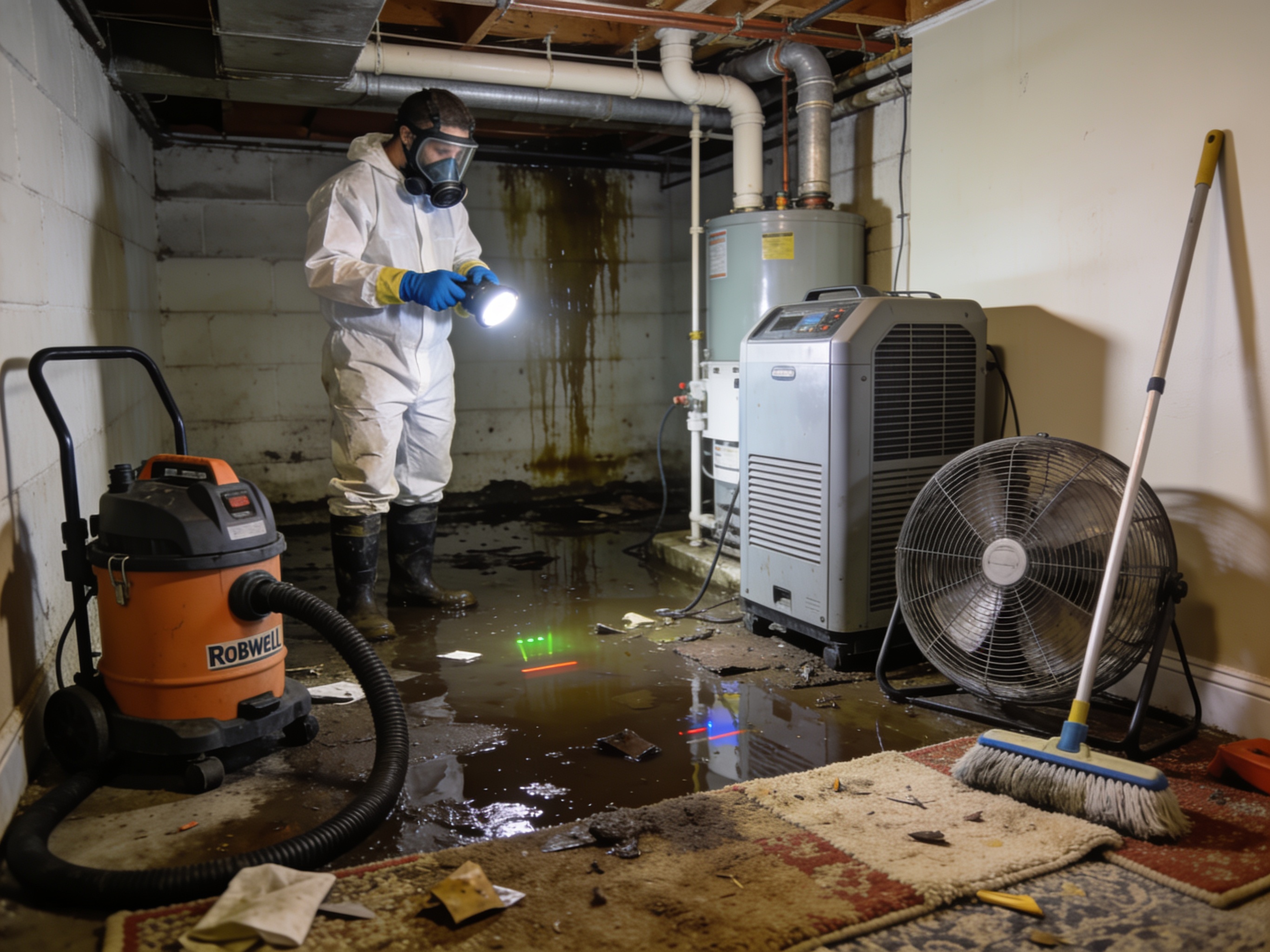
When our team arrives, the first step is to contain the affected area to prevent cross-contamination to other parts of your home. We use specialized personal protective equipment (PPE) to ensure the safety of our technicians. We then begin the water extraction process using powerful pumps and wet vacuums to remove all standing sewage. Following this, any porous materials that have been saturated with sewage, such as carpeting, carpet padding, drywall, and insulation, must be carefully removed and properly disposed of, as they cannot be effectively sanitized.
After removal, all hard surfaces—flooring, walls, and structural elements—are thoroughly cleaned and disinfected using EPA-approved antimicrobial agents. This step is critical to eliminate bacteria, viruses, and other pathogens. The area is then dried using industrial-grade air movers and dehumidifiers. This process is meticulous, ensuring that all moisture is removed from the building materials to prevent mold growth. Finally, we perform <a href="/services/sanitization-and-disinfection">sanitization and disinfection</a> of the entire affected zone, often followed by an <a href="/services/odor-removal-treatment">odor removal treatment</a> to ensure your home is safe and habitable again. This comprehensive approach is vital, especially considering Roswell's climate, where even mild winters can still provide conditions ripe for mold if moisture lingers.
Preventing Future Sewage Backups
While some sewage backups are unavoidable, many can be prevented with proper maintenance. Be mindful of what goes down your drains and toilets. Avoid flushing anything other than human waste and toilet paper. Grease, food scraps, "flushable" wipes, and feminine hygiene products are common culprits for blockages. Consider having your main sewer line inspected periodically, especially if your home is older or you live in areas like Berrendo or near the Spring River Park and Zoo, where tree roots can infiltrate sewer lines over time. A professional inspection can identify potential issues like root intrusion or deteriorating pipes before they cause a major backup.